


ARTICLE


Does Switching to Activity-Based Data Count Toward Your SBTi Target? | Bardo
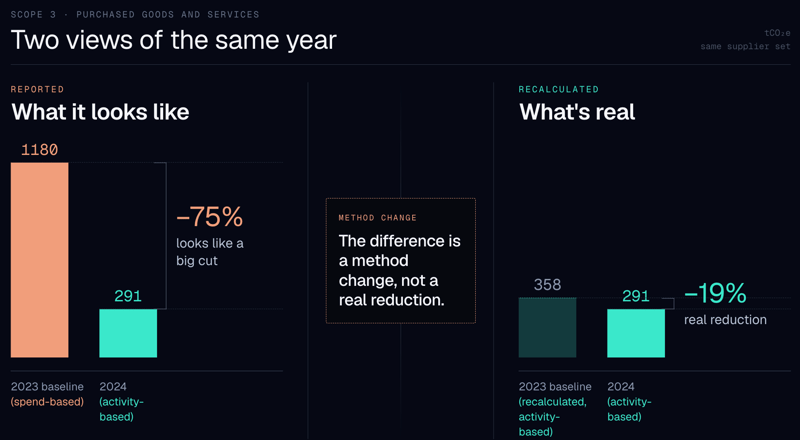
You switch from spend-based to activity-based carbon accounting, and your Scope 3 number falls. Sometimes sharply. The instinct is to celebrate. The harder question comes next: did your emissions go down, or did your measurement just get better? And if it was the measurement, does that drop count toward your science-based target?
01 - WHY THE NUMBERS MOVES
Why does better data change your reported emissions?
Switching from spend-based to activity-based accounting changes your number because it replaces averages with specifics, not because anything physical changed. Spend-based multiplies what you spent by a broad industry factor. Activity-based starts from what you actually bought, from which supplier, in what quantity. The result is usually lower, and either way the shift comes from precision, not a cleaner supply chain.
02 - PAPER REDUCTION VS REAL REDUCTION
Is a drop from a methodology change a real reduction?
No. A fall that comes from better data is a measurement change, not an emissions cut. Count it toward a reduction target and you can hit the goal without the climate improving. KPMG makes the same point about financed emissions: failing to adjust your baseline can unfairly present your actual performance. The distinction that matters: a paper reduction is driven by method, a real one by supplier switches, product choices, or lower volumes.
03 - WHAT THE STANDARDS REQUIRE
What do SBTi and the GHG Protocol require when your method changes?
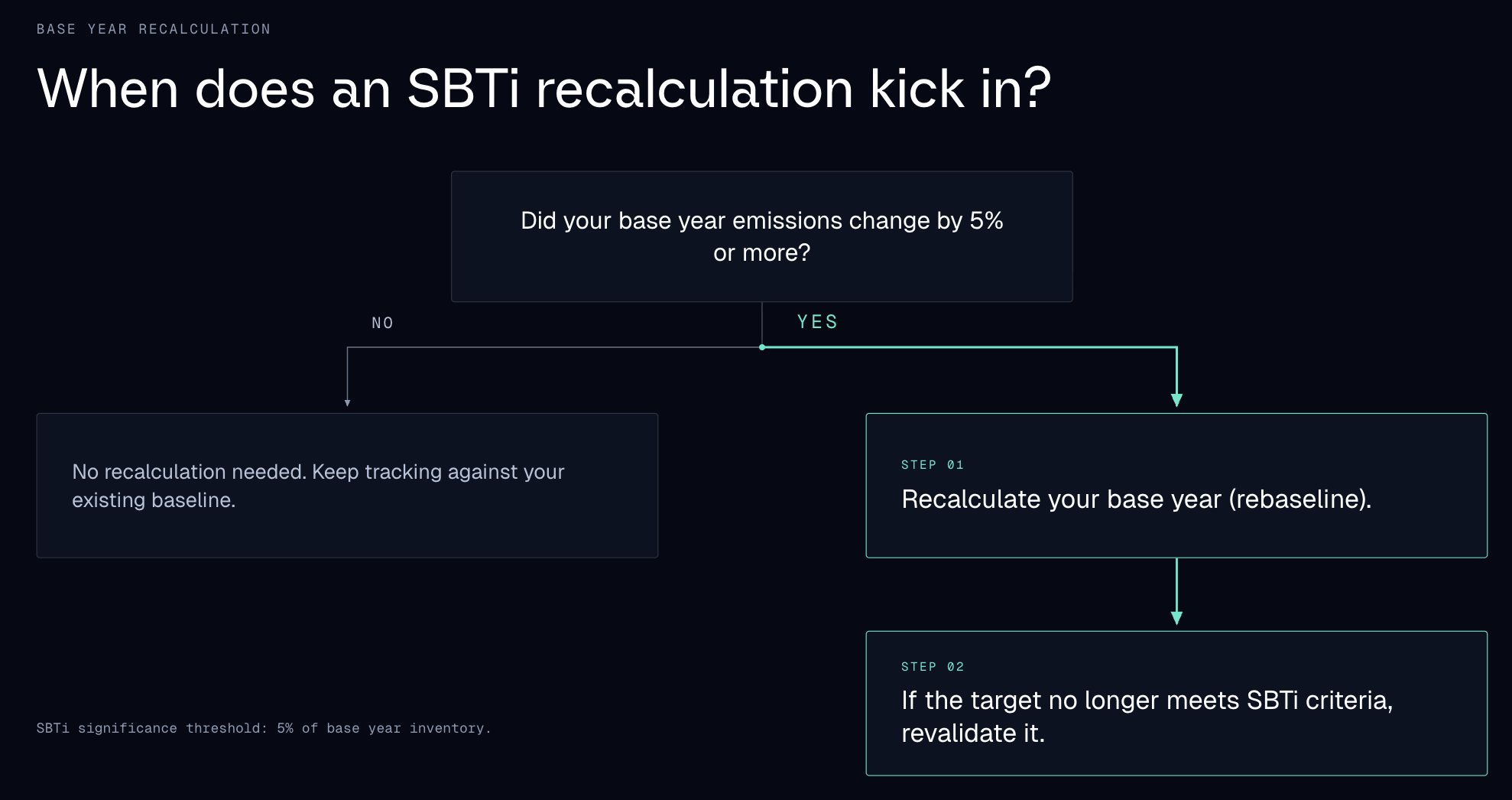
They require you to recalculate the base year. The GHG Protocol Corporate Standard tells companies to recalculate fixed base year emissions when the calculation methodology, or the accuracy of emission factors and activity data, changes significantly. The Scope 3 Calculation Guidance is more direct: if changes in data quality produce significant differences, companies are required to recalculate base year emissions using the new data sources. The SBTi Corporate Near-Term Criteria sets the trigger. A change of 5% or more in base year emissions requires a recalculation, and if the target no longer meets the criteria, it must be revalidated.
A methodology change is not a loophole. It is a recalculation event.
Source: SBTi Corporate Near-Term Criteria
04 - HOW TO REBASELINE
How do you rebaseline without losing comparability?
You rerun history on the new method. Recalculate the same base year invoices activity-based, so the old year and the new year are measured the same way, which gives you a comparable baseline to track against. To keep it audit-ready, freeze each submitted period, version your emission factors, and keep a change log, so a later shift traces to a specific factor update rather than guesswork. Done well, you show the method delta and the real reduction as two separate lines, which is what an auditor and the SBTi want to see.
05 - HOW BARDO HELPS
How can Bardo help?
Bardo reruns your historical invoices activity-based to rebuild a comparable base year, freezes submitted periods, and versions every emission factor with a changelog. This separates better measurement from real reduction, and lets you defend both. Bardo delivers the inventory and traceability; target strategy and SBTi validation sit with your auditor or science-based-target partner, working from Bardo's data.


Try for yourself
See what we'd find in your data.
We'll analyze a sample of your invoices and show you what real carbon data looks like for your organization.
See it in action
 Talk to our team
.svg)